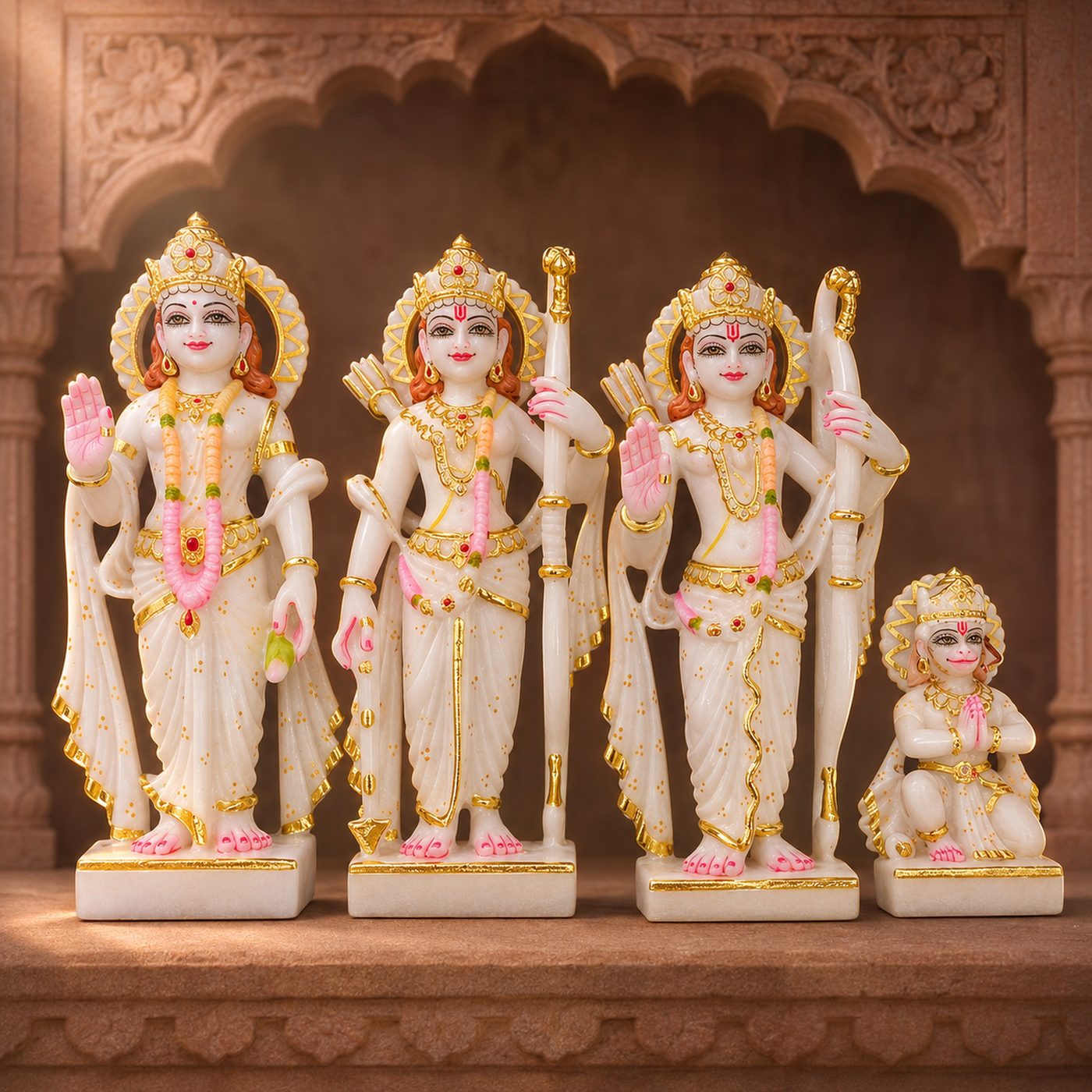
A murti for a temple is not an ordinary purchase. It will be worshipped for generations, and it often has to be ready for a fixed date. Over the years, temple committees have asked us the same questions, so we have put the answers in one place.
1. Deity, posture and tradition
Start with your priest or acharya. The deity, the posture, what the murti holds and the direction it faces often follow the tradition of your temple. Bring us their guidance, or a photo of a murti you like, and we will carve to it.
2. Size that fits the sanctum
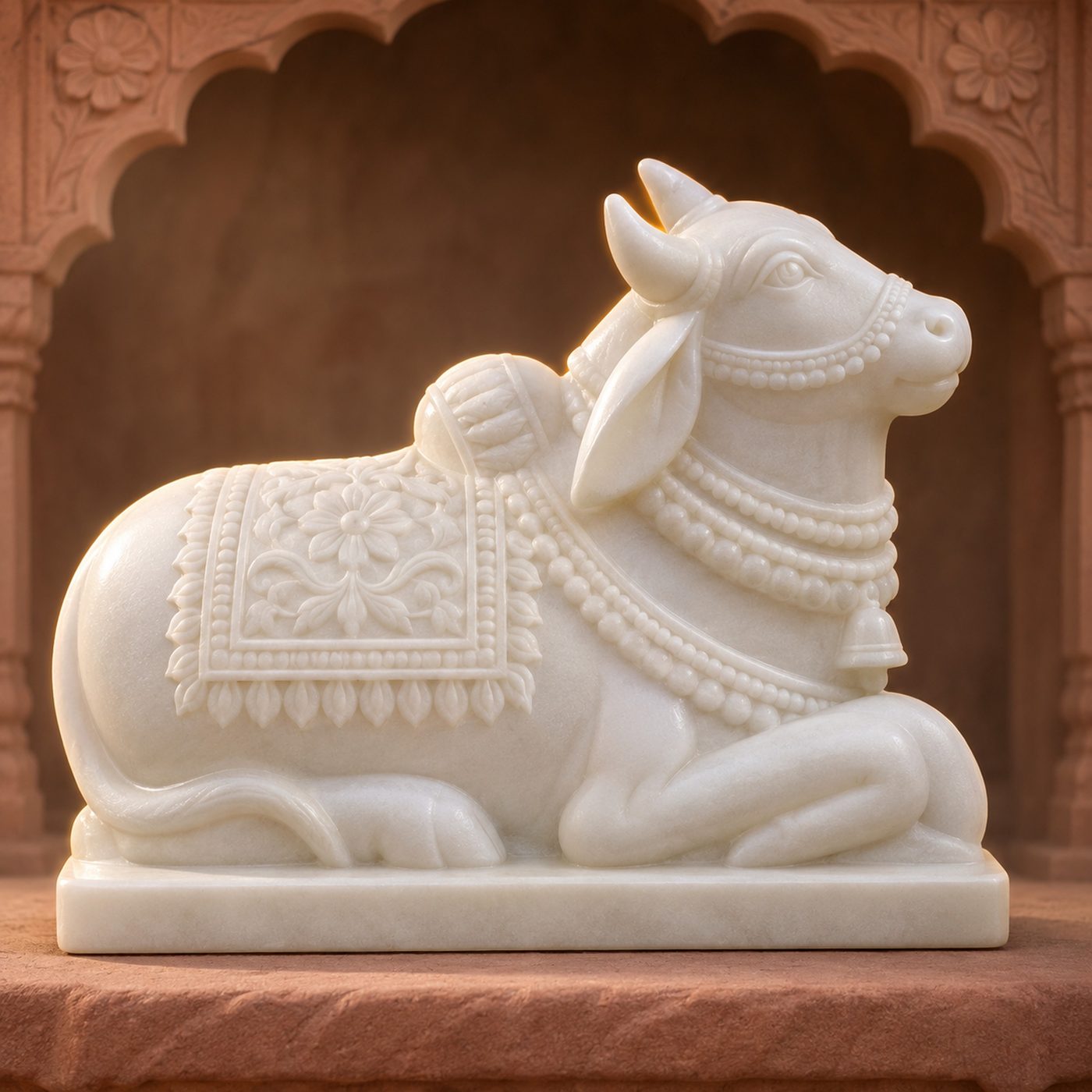
Measure the garbhagriha, the doorway and the height of the platform the murti will stand on. The murti must look right from where devotees stand, and it must also fit through the door. Nandi, elephants and lions for an entrance or courtyard are sized to the space around them.
3. White or painted
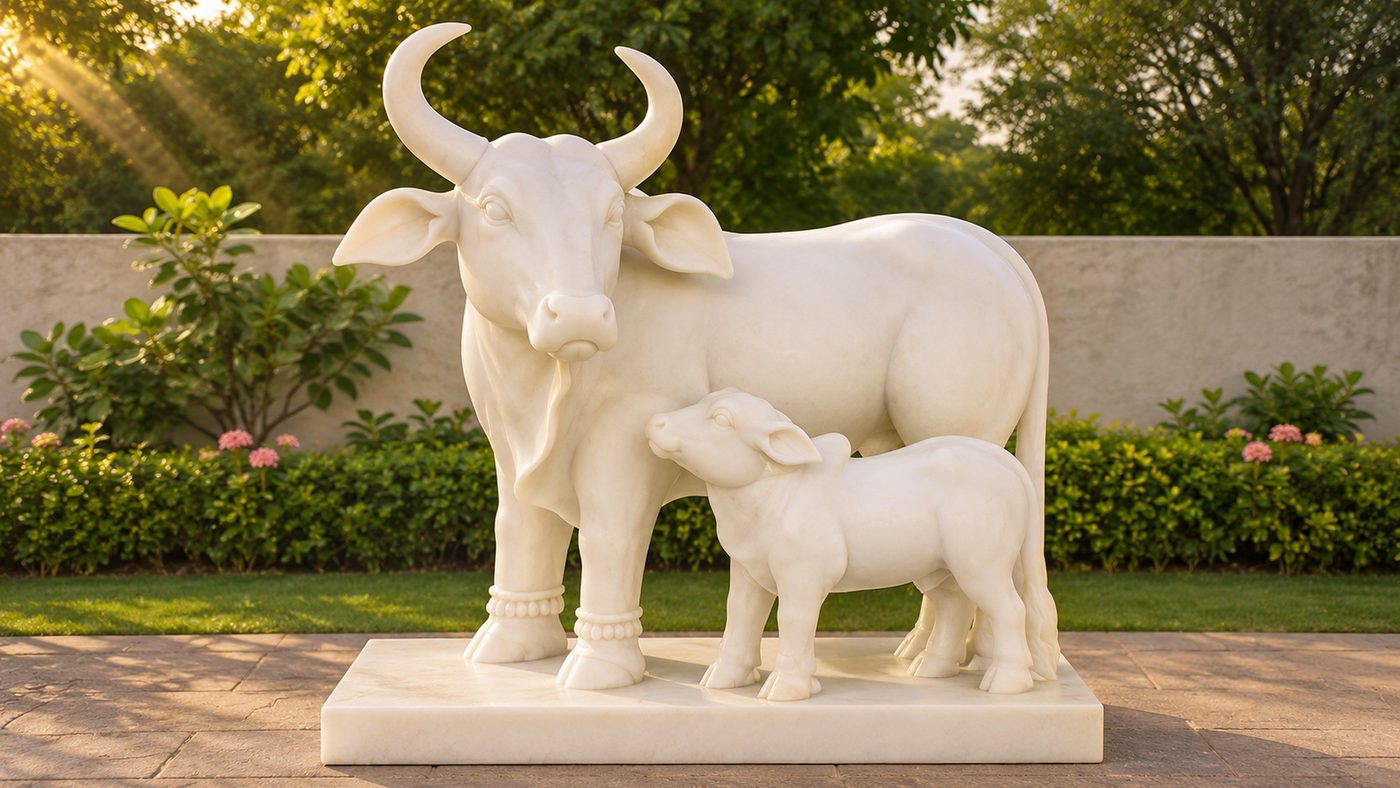
Many temples prefer pure white marble. Others want colour and gold work on clothing and ornaments. Decide this early, because painting adds time. Our article on how we hand-paint murtis shows what is involved.
4. Work back from your date
If you have a date for pran pratishtha or an inauguration, tell us at the very start. Large pieces are carved from a single block and take time, and the work cannot be rushed at the end. We plan carving, finishing, packing and transport back from your date.
5. Packing and delivery
Finished pieces are packed in strong wooden crates so they travel safely. For very large statues, check the road to your site: can a truck and a crane reach the place where the statue will stand? Share photos of the site and the approach road with us before the delivery is planned.
Your checklist
- Deity, posture and details agreed with your priest
- Measurements of the sanctum, doorway and platform
- White or painted finish
- The date the murti must reach the temple
- Photos of the site and the approach road
- One contact person from the committee