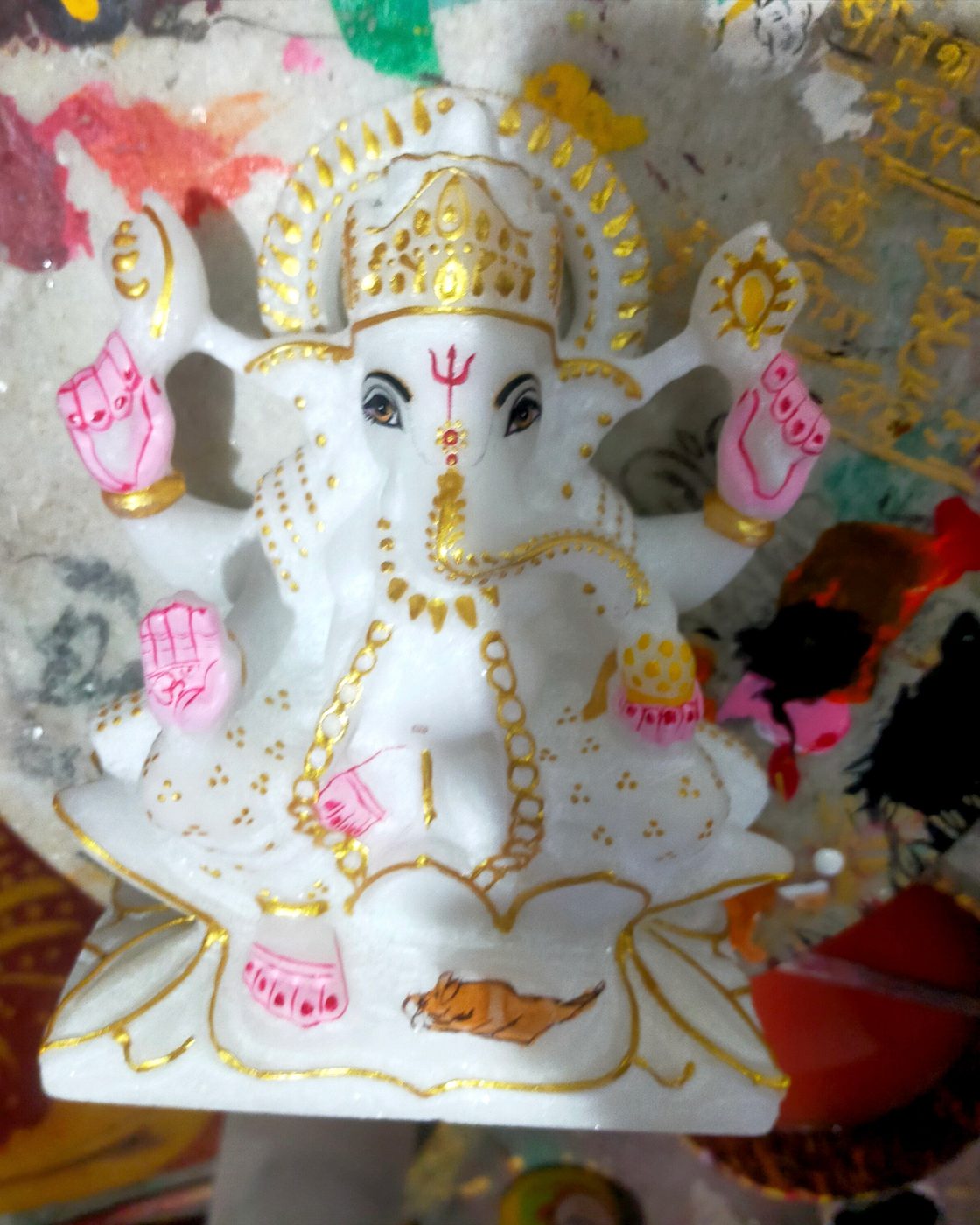
A murti in a home mandir is seen up close, every day. That is why the painting matters as much as the carving. In our workshop, painting is done by hand, one murti at a time, by craftsmen who sit with the murti in their lap and work stroke by stroke.
It starts with white marble
Before any colour goes on, the murti is carved and smoothed. The white marble is the base for everything: a clean, even surface lets the colours sit evenly and keeps fine lines sharp. Many families choose to keep their murti fully white. Others prefer colour and gold work. Both start the same way.
Colours and clothing
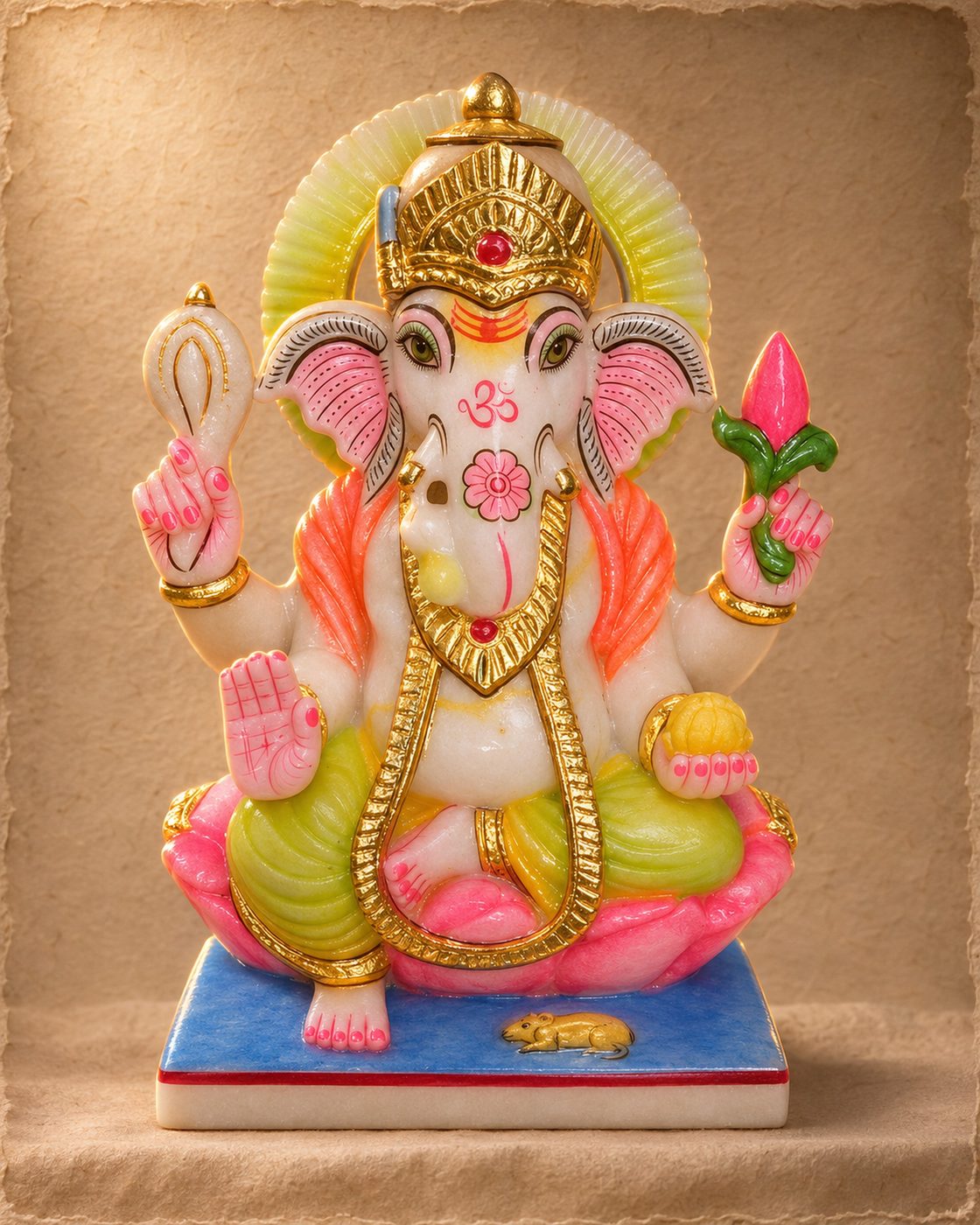
The painter first fills in the larger areas: the clothing, the borders, the flowers. Colours are mixed in small cups beside the painter and applied with thin brushes so they stay inside the carved lines.
The eyes come last
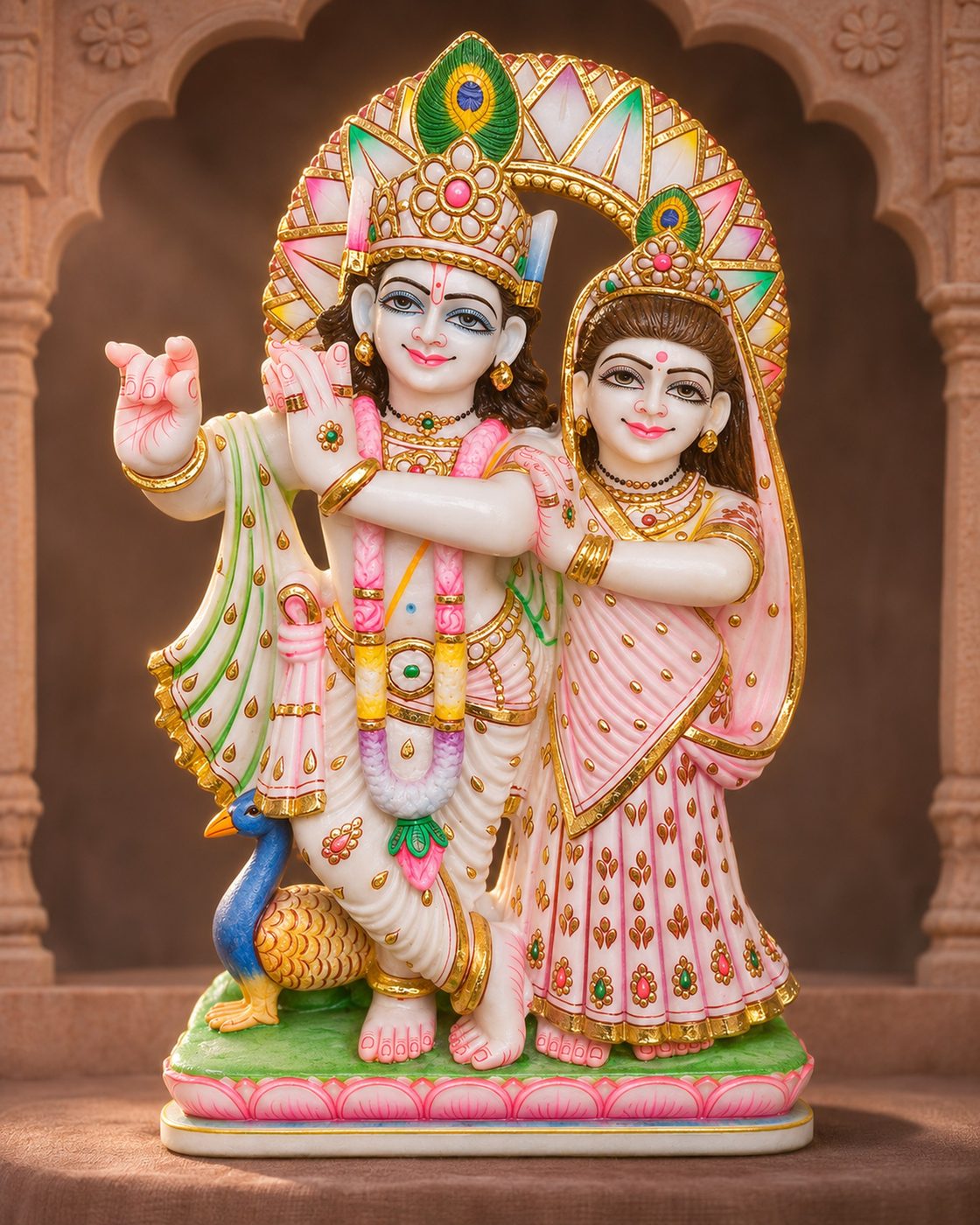
The face is the most important part. The eyebrows, the eyes and the lips are drawn with the finest brush, very slowly, with the painter's hand resting on the murti to keep it steady. A small change in a line changes the whole expression, so this is done only by our most experienced hands.
No two are exactly alike
Because every murti is painted by hand, small differences between two murtis of the same deity are natural. That is the mark of hand work, not a fault. If you want a particular colour of clothing or more or less gold work to suit your mandir, tell us when you enquire.
Caring for a painted murti
- Dust it gently with a soft, dry cloth or brush.
- Avoid scrubbing painted areas, and keep harsh cleaners away from them.
- If you do abhishek with water or milk, ask us which finish suits that before you order.
- Keep it away from strong direct sunlight for long periods so the colours stay bright.